Why AI belongs in my story
My voice was always here. AI helped it travel.
AI is controversial, and I understand why. I have seen technology used in ways that take from people instead of giving to them. I do not believe it should replace human creativity, human care, or the kind of connection that makes a person feel truly seen.
But I have also lived the other side of it.
For someone like me, AI is not about replacing people. It is about reach. It is the difference between an idea staying trapped inside one person and that idea finally making it into the world. It helps me turn rough thoughts into writing, videos, websites, and tools even when my body cannot give me a normal workday.
AI did not give me a story. It gave my story reach.
The beginning
I was not supposed to have this life.
I was born with Russell-Silver syndrome, a rare growth disorder, along with intestinal failure. I was also diagnosed with autism at four. When I was three, feeding problems led to a central line and TPN so my body could receive nutrition through an IV.
Then my blood sugar climbed past 800. I went into diabetic ketoacidosis and had a stroke at four years old. Doctors told my parents I might not live past four. If I did, they believed I might never walk or talk again.
My parents carried words no parent should have to carry. I had to relearn things a child should never have to lose. By the grace of my God, Jesus Christ, I survived. I learned to walk again. I learned to talk again. And, one difficult step at a time, I kept going.
I learned how to survive before I ever had the chance to learn how to live.
Hospitals became a second home. I have spent more than seven years of my life inside them, not counting all the appointments in between. I missed school, friendships, and ordinary moments that other people my age could take for granted.
Where Walk With Bravery began
A treadmill, my mom, and miles shared from far beyond one hospital room.
During one hospital stay, I was an inpatient for an entire year. The room began to feel like the whole world, and I needed something that belonged to hope instead of fear.
I told my mom that I wanted to organize a walkathon. She is my greatest supporter and my best friend. Instead of hearing all the reasons it would be difficult, she heard the idea. Together, we brought a treadmill into my hospital room.
I could not leave the hospital to join a walk, so the walk came to me. I moved according to what my body allowed; bravery did not mean denying my limits. It meant beginning something meaningful from inside them.

People outside the room began walking, running, riding, and sharing miles of their own. We dedicated the steps and proceeds to the autoimmune department. Their return turned isolation into connection and gave Walk With Bravery its name.
I was the one on the treadmill, but I was never walking alone.
Explore the full story and shared-mile archiveA name for the fight
The answers came slowly. The living had to continue anyway.
At 17, doctors finally named the rare disease that had been quietly attacking me: eosinophilic granulomatosis with polyangiitis, or EGPA. In simple terms, cells in my own blood were turning against my organs and causing inflammation in my blood vessels.
In my early twenties, that vasculitis contributed to a thrombotic storm. I had clots in my brain, multiple clots in my arms, one running from my neck toward my heart, and a pulmonary embolism. Doctors called it my second stroke.
In 2018, when it felt like the available treatments had run out, the Right to Try Act helped me access an investigational treatment. It did not make every symptom disappear. It gave me enough stability to begin imagining a life beyond the next hospital room.
I still do not drive. I still need support from my parents. I live in a tiny house on their property so I can stay close to the help my health requires. Those things are true—but if that is all you know about me, then you have not really met me yet.
“Weeping may endure for the night, but joy comes in the morning.”Psalm 30:5
I love music. I love making people laugh. I love turning a rough idea into something real. I am a son, a coworker, a friend, a creator, and a person of faith. My illnesses are part of my story. They are not the measure of my ability or my worth.
Rare Disease Day
The mission grew, but the reason stayed personal.
Rare Disease Day gives people a reason to pause and acknowledge lives that are often misunderstood or unseen. I do not see it as a celebration of suffering. I see it as a chance to choose understanding, support, research, and advocacy.
I have spent years feeling as if illness introduced me before I could introduce myself. Walk With Bravery is my way of changing that—not only for me, but for anyone facing illness, disability, isolation, or uncertainty who needs to know that a diagnosis is not the sum of who they are.
The battle deserves to be seen. So does the whole person living it.
Read my Rare Disease Day reflectionBrewability
Then one person gave me a chance.
When my health finally became stable enough, I started looking for my first job at 21. I did not need an impressive title. I needed somewhere to be, something useful to do, and a reason for pain not to take up every part of my day.
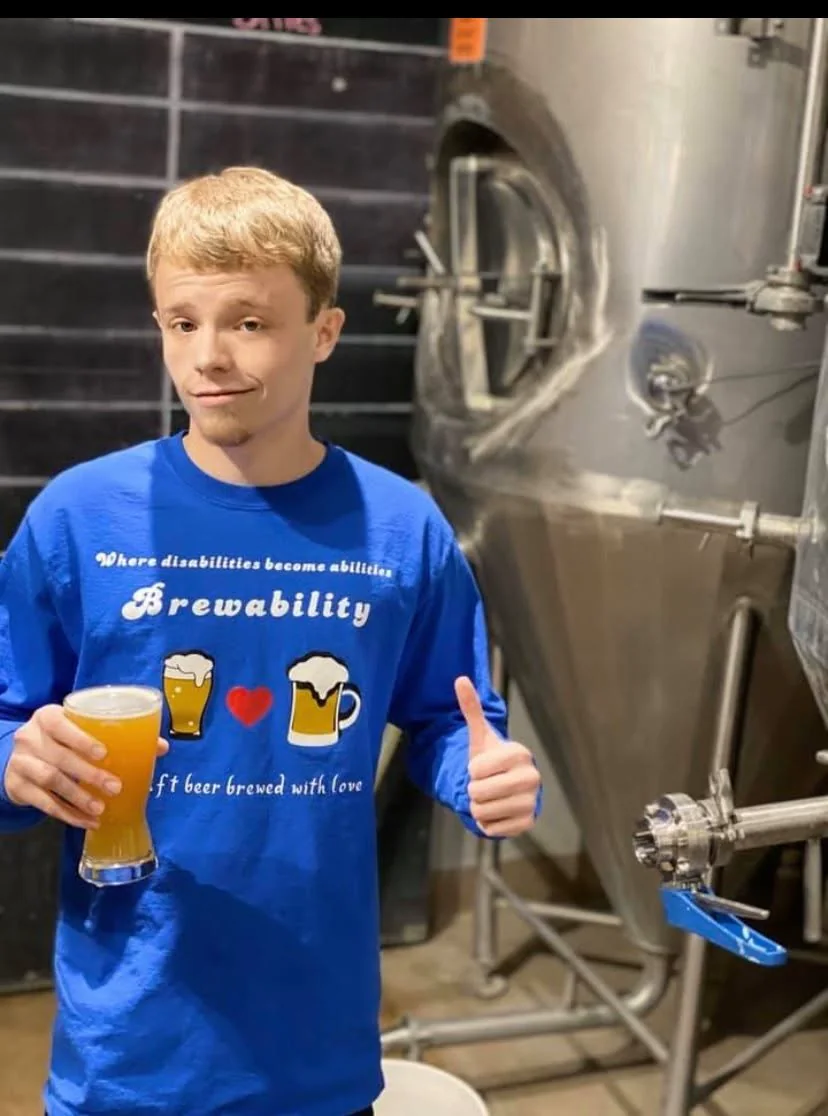
Employers kept seeing my hospital stays before they saw me. I was called unreliable and not worth accommodating. Then I found Pizzability, which grew into Brewability/Pizzability—a workplace built around adults with disabilities.
“Come behind the counter. Let's see if you can pour a beer.”“When can you start?”“I can start Monday.”
It sounds like a small conversation. To me, it was a door opening.
Brewability became family. I learned to make pizzas, pour beer, talk with customers, work with a team, and help other people succeed. More importantly, I learned to embrace my disabilities instead of being ashamed of them.
For the first time, I felt I belonged—not because my disabilities disappeared, but because they no longer made me an outsider. The work gave my pain less of my life. It gave me hope, belonging, and purpose.
Where AI comes in
My body has limits. My ideas do not.
I was never a technical person. I did not grow up imagining I would build websites, applications, music communities, or accessibility tools. I thought that work belonged to people with more training, more energy, more money, and a whole team behind them.
The ideas in my mind do not stop arriving just because my body is having a hard day. AI helps me break those ideas into steps I can manage. It helps me communicate when energy is low, learn skills I did not think were within reach, and keep building from my tiny house while staying close to the support I need.
That is not a machine replacing me. That is an accommodation meeting me where I am.
AI cannot care for me, believe in me, or walk through the hard days beside me. People do that. It can make mistakes, and it should never replace empathy, flexible workplaces, or real human judgment. But used with honesty and care, it can open doors to communication, independence, creativity, and work that might otherwise stay out of reach.
Work that might normally require a team is work I can now begin myself. A message that might have stayed inside my tiny house can reach someone who feels alone. That is not a threat to me. It is a door I was never supposed to walk through.
Walk with me
This mission is bigger than my story.
Adults with disabilities are capable of far more than the world assumes. Too often, our ability stays hidden because the systems around us were never designed to let us contribute at full strength. Accommodation does not create our potential. It gives that potential room to be seen.
If you live with disability, chronic illness, or a body that changes the rules from one day to the next, I want you to know this: your struggle is real, but it is not your identity. Your ideas matter. Your contribution matters. Your story is still being written.
I am still here. I am still building. And I am going to keep walking with bravery.